Showing posts with label culture. Show all posts

April 11, 2012

Taiko Drum Girls


I took these photos at Sumida Park.
They were playing Japanese drums as an attraction of a cherry blossom festival.


(Note)
These photos were taken on April 7 , 2012.

August 22, 2010

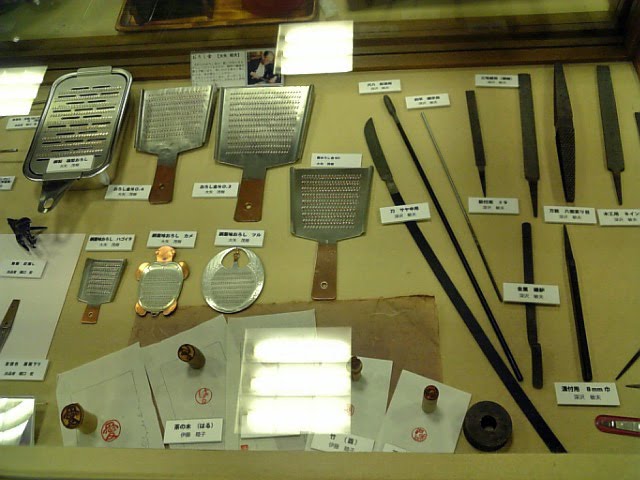
Edo Shitamachi Traditional Craft Museum


I have already introduced you photos of Ueno and Asakusa district in this blog.
Those districts are included in Taito-ku (Taito-ward).
Taito-ward is a typical old down town of Tokyo.
It prospered by commerce and excellent craftwork industry in Edo era.

And many craftsmen still inherit technologies of traditional craftwork.

Edo Shitamachi Traditinal Museum was established by Taito- ward to support traditinal technology, and to introduce those fine works.
This small museum stands on Hisago-dori(street) in Asakusa.


(Note)
These photos were taken on May 19 , 2010.

August 16, 2010

Pictures of Sumo Wrestler


I took these photos on Sumida-gawa (river) Terrace.
Original paintings of them are kept in The Sumo Museum.

(Note)
These photos were taken on July 10 , 2010.

June 21, 2010

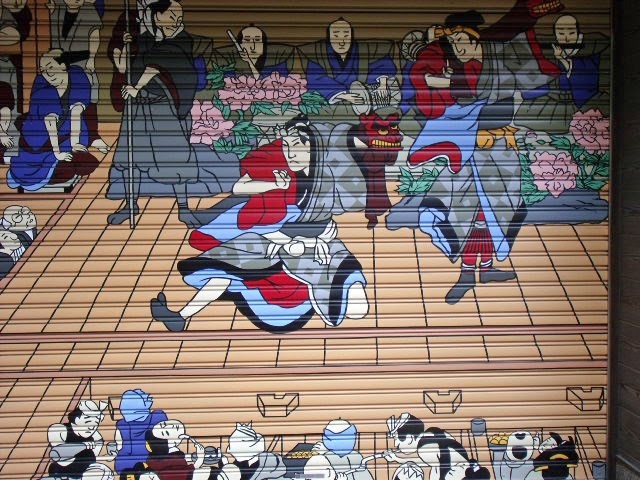
Garage Shutter of Asakusa Public Hall


I took these photo on denpoin-dori ( street ) in asakusa.
You can see a kabuki stage in Edo era on the garage shutter.

(Note)
These photos were taken on Jun 15 , 2010.

June 2, 2010

Shutter Art in Asakusa


I took this photo on denpoin-street.
That is a udon (Japanese thick noodle) restaurant.
If you visit asakusa in morning, you can see many nice shutter art.

(Note)
This photo was taken on May 19 , 2010.

May 28, 2010

Omikuji (Written Fortune)


I took these photos at Senso-ji temple in asakusa.
Omikuji is a piece of small paper telling one's fortune.
You can see a girl smiling in the photo above.
I think she drew great blessing.


Those papers on bar are Omikuji which had been read.

(Note)
These photos were taken on May 19 , 2010.

May 8, 2009

Rickshaw in Ginza

rickshaw in ginza
I took this photo on sotobori-dori (street) at ginza.
Those rickshaws are for parade of Ginza Yanagi Matsuri.
You can see runners of rickshaw in this photo.
I will show you those rickshaws running tomorrow.

(Note)
This photo was taken on May 5 , 2009.

May 4, 2009

Shinji-pond in Hibiya Park

shinji-pond in hibiya park
This pond is located in hibiya park
Hibiya-park is designed with western style.
But this pond and garden around the pond have traditional Japanese style.
That place was a moat of former edo-castle ever.
You can see stone wall over the pond in these photos.

By the way "shinji (心字) literally means a character (symbol) that indicate "heart".
The shape of the pond looks like figure of a kanji symbol, "心 (kokoro, shin)".
(If you look at the pond from above the pond.)

This idea came from Zen (禅).

(Note)
These photos were taken on April 29 , 2009.

April 25, 2009

Rickshaw in Yamamoto-tei

Rickshaw in yamamoto-tei
yamamoto-tei
This rickshaw is set on an entrance of yamamoto-tei.
English word, "rickshaw" came from Japanese word "jinrikisha".
Jinrikisha literally means human power vehicle.

(Note)
These photos were taken on April 11 , 2009.

April 14, 2009

Approach to Taishakuten Temple

approach to Taishakuten temple
Shibamata is an old temple town of Taishakuten temple.
Photo above is the approach to Taishakuten.
Many shops such as souvenir shops and traditional food shops row along both side of the approach.
I introduce you some traditional snack shops on the approach.

Japanese dumpling shop
Photo above is a Japanese dumpling shop.

Japanese candy shop
Photo above is a Japanese candy shop.

rice cracker shop
Photo above is a rice cracker shop.

I think this approach remains atmosphere of Edo era.


(Note)
these photos were taken on April 11 , 2009.
Related Posts Plugin for WordPress, Blogger...